
Lade Informationen...
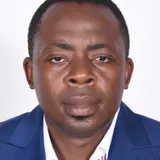
Postdoctoral fellow
University of Manitoba
Franck E. Kemgang Ghomsi, PhD
Physical Oceanographer | Sea Level Researcher | Geodesist | Geophysicist
University of Cape Town & University of Manitoba
🔗 ORCID: 0000-0002-1465-6989
Background & Professional Experience
Dr. Franck E. Kemgang Ghomsi is a dual-PhD researcher at the intersection of physical oceanography, geodesy, and climate science. He holds a PhD in Oceanography from the University of Cape Town (2025), where his thesis addressed sea level variability in the Tropical Atlantic since 1993 and projections to 2100, and a PhD with Highest Distinction in Geophysics from the University of Yaoundé I, focused on crustal configuration of African hotspots from global gravity models. He also holds an MSc in Physical Oceanography from the University Paul-Sabatier (Toulouse III, France).
He currently holds dual postdoctoral positions as a Research Associate at the Department of Oceanography, University of Cape Town (since September 2025), working on coupled physical-biogeochemical modelling of the West African Margin, and at the Centre for Earth Observation Science, University of Manitoba (since October 2024), focusing on Southern Hemisphere sea level variability and the Antarctic ice sheet contribution. Prior to these positions, he served as a Geodesist & Geophysicist at the National Institute of Cartography, Ministry of Scientific Research and Innovation, Cameroon (2018–present).
His research integrates satellite altimetry, satellite gravimetry, GNSS, tide gauge records, and numerical ocean modelling to study sea level rise, ocean heat content, steric contributions, and geodynamics across African and Southern Ocean domains. His most recent high-impact publication, "2023–2024 El Niño amplifies record sea level surges in African marine domains" (Communications Earth & Environment, Nature Portfolio, 2026), demonstrates how compound ocean–atmosphere forcing produced the largest detrended sea level anomaly on record in African marine regions, with critical implications for coastal flooding, land subsidence, and marine productivity.
With 54 peer-reviewed publications, over 590 citations (Google Scholar), an h-index of 15, and an i10-index of 21, his work spans sea level science, crustal geophysics, gravity field modelling, and coastal hazard assessment. He has presented his research at major international venues including IAG Scientific Assembly, IUGG, EGU, Ocean Sciences Meeting, and WCRP Open Science Conference, where he also co-chaired scientific sessions.
Dr. Ghomsi is an active member of the IAG Inter-Commission Committee on Geodesy for Climate Research (ICCC), an IAG Early Career Scientist (ECS) Representative, and a member of the WCRP Global South Inclusion Task Team (GSiTT). He is the main organizer of the 2026 Geodesy Summer School in Limbe, Cameroon (africangeosummer.org), supported by a $50,000 grant from the University of Manitoba, the Nansen Scientific Society, and the WAM project. He was recognized as the 2025 WCRP Scientist of the Month and was the first African researcher profiled in the EGU Geodesy Division's "Expanding the Picture" series.
His expertise spans satellite geodesy, ocean remote sensing, gravity field analysis, numerical ocean modelling (NEMO, CROCO, MPAS-Ocean), and scientific programming (Python, MATLAB, Fortran, Julia), making him a highly interdisciplinary contributor to the geodesy-climate interface.

Datum
Afrikas Küstenregionen sind mit einem beschleunigten Meeresspiegelanstieg konfrontiert, der durch Klimavariabilität zusätzlich verschärft wird. In dieser Studie analysieren wir Satellitenaltimetrie-Daten von 1993 bis 2024 für die afrikanischen Meeresgebiete. Der El Niño 2023–2024 verursachte die größte jemals verzeichnete (um den Trend bereinigte) Meeresspiegelanomalie (27 mm) und übertraf damit sogar das stärkere Ereignis von 1997–1998. Diese außergewöhnliche Reaktion resultierte aus einer ozeanischen Vorkonditionierung: Rekordwerte des Indischen-Ozean-Dipols, des Atlantischen Niños sowie der Indizes des tropischen Nordatlantiks gingen dem El Niño voraus und verstärkten dessen Wirkung. Gleichzeitig unterbanden anomale Winde das Aufquellen von Kaltwasser (Upwelling), während eine Rekord-Schichtung des Wassers die Oberflächenwärme einschloss, was den Wärmeinhalt des Ozeans vervierfachte. Die thermische Ausdehnung machte über 70 % der Gesamtanomalie dieses Ereignisses aus und erreichte fast 30 mm im gesamten afrikanischen Meeresraum. Seit 1993 ist der Meeresspiegel um insgesamt 11,26 cm angestiegen, wobei die Beschleunigungsrate von 0,14 mm/Jahr² den globalen Durchschnitt übersteigt. Diese Ergebnisse verdeutlichen die kombinierten Bedrohungen für tiefliegende Deltas und kleine Inselentwicklungsländer (SIDS) durch Überflutungen, anhaltende Landabsenkungen und sinkende marine Produktivität.